The Spirit is Guiding Nico Segal
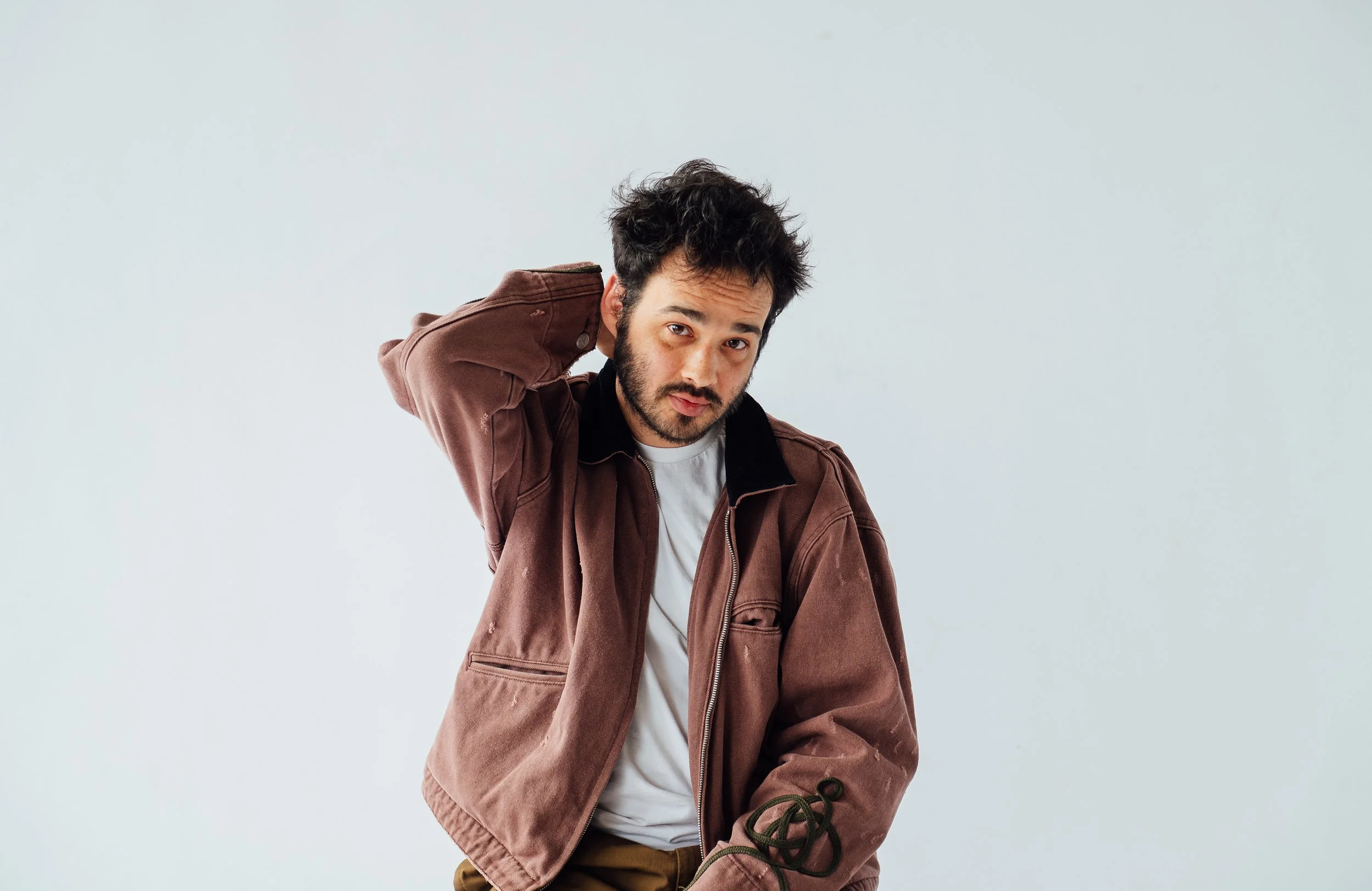
Photography by Alexander Jibaja.
On the night of August 3, 2014, tucked in between the two biggest stages at Lollapalooza, over 60,000 people crammed in at Perry’s to see the hometown hero, Chance the Rapper. After a long, humid and muddy day, attendees (along with hundreds of thousands watching online) witnessed one of the most transcendental performances in the festival’s history.
But what might have gotten lost in time is that the night wasn’t an individual feat, but rather a collective triumph for Chicago’s creative movement. Backed by Nico Segal on trumpet, Nate Fox, Peter Cottontale and Greg “Stix” Landfair as The Social Experiment, plus a choir featuring Eryn Allen Kane, Lili K and Maceo Haymes of The O’My’s, and appearances by Vic Mensa and Dlow, Chance shared the stage with peers who had been shaping the city’s sounds in basements, open mic events, and small venues just a couple years before.
It was one of those rare moments that captured the kinetic energy of Chicago’s 2010s musical renaissance (another one being Chief Keef performing at Andreas in 2012) and inspired the creation of These Days.
By the time The Social Experiment released the radiant and much-beloved Surf in the spring of 2015, These Days was in its final planning stages, launching that September, eager to document the era and ensure those moments wouldn’t fade.
Like Surf, These Days turns 10 this year. And like Surf, this publication’s origin story has as much to do with Nico Segal as it does with anyone whose contributed to it over the past decade.
Before SoX, there was Kids These Days, a seven-piece band of rowdy teenagers drawing from an eclectic set of influences. With Nico on trumpet, alongside Vic Mensa, Macie Stewart, Liam Cunningham, Lane Beckstrom, Stix and J.P. Floyd —they fused rock, hip-hop, and jazz into something electric. For those fortunate enough to see them live, the group felt like a revelation: young, bold, and unrestrained. Their ethos —expansive, buoyant, and collaborative—would be another big inspiration for this magazine, even lending its name.
When the band broke up just months after releasing their debut album Traphouse Rock, fans were stunned. Vic once rapped that the breakup felt like a C-section, and by many accounts, Nico took it even worse. It wasn’t just that the group had dissolved on the cusp of a national breakthrough; it was about losing the joy of creating with friends.
The day after Kids These Days’, unknowingly, final show, Nico traveled with J.P. to join Frank Ocean’s tour band for a world tour rehearsals. In the years that followed, he released the Donnie Trumpet EP, moved to Los Angeles, and played a key role in Chance’s rise, first as a collaborator and then, as part of the rapper’s live band during The Social Experiment Tour.
As These Days prepares to close its run at the end of 2025, reflecting on that era naturally brings us back to Nico. The passage of time has made some memories hazy, but he still excitedly recalls making music with Peter Cottontale before that first tour and meeting Nate Fox on the road as the moments that turned a touring band into a recording collective.
“I vividly remember [meeting Nate on tour] because it was so much fun. But I also remember it because right before we went on stage, he was in the green room making beats on his computer and they were just immediately so hot (...), and his energy on stage was just so infectious.”
The Social Experiment arrived at a pivotal moment in Chance’s career. Following the critical success of Acid Rap, the band became an outlet to create freely and offer respite to fans eager for more music from rap’s newest star. Somehow it worked. It’s hard to explain now without sounding like that “Sure, Grandpa, let’s take you to bed” meme, but their cover of the Arthur theme song, “Wonderful Everyday,” and a precursor to Surf, was so embedded in the cultural zeitgeist that it became a staple of their festival run, which included that now-mythical Lolla set.
These Days set out to cover Chicago’s artists with the seriousness and appreciation they deserve, a value Nico shares. His work and reflections are marked by reverence for his friends and mentors. And though Surf leads off with his name, he is quick to credit the full collective.
“I brought in some demos and I had a lot of ideas about the music, (...) but really it took all of us. We were sitting around one computer, making a lot of decisions together. And that to me is what I look back on most fondly musically, using all of our brain power to see a collective vision, to see a collective goal.”
Anchored by the band’s tight-knit kinship, Surf was a testament to the power of collaboration. Propelled by Chance’s budding stardom, its surprise guest list stretched from Erykah Badu and Janelle Monáe to J. Cole and Quavo, alongside homegrown talents like Jamila Woods, Saba and Noname. According to DJ Booth, 57 artists were credited in total. Yet the album, conducted by Nico, somehow manages to sound both cohesive and freewheeling, its jazzy, soulful instrumentals forming the bedrock for a kaleidoscopic set of ideas.
“All these genres and all these sorts of places that I’m inspired by are all blended together and turned into, I guess, what you could just call pop,” Nico shared in our recent conversation. “I mean, what is Stevie Wonder or Michael Jackson, if not the same thing? A combination, or accumulation, of all these different sounds and styles that people love and grow into and evolve and make their own.”
Music, at its best, can make time feel non-linear. Listening to Surf today can pull you right back to the fever dream that was the summer of 2015: “Sunday Candy” becoming an unlikely yet inescapable hit; The Social Experiment surprising fans with Kendrick Lamar at TIP Fest, the free event for Chicago’s youth; and Chance delivering a career defining set at Pitchfork, backed by The Social Experiment and Surf. The album sounds distinctly of its era, and yet, it still finds new ways to make you feel hopeful of a better future in these turbulent times.
Chance’s Coloring Book, Grammys, shows at the White House and sold-out arena tours all followed in rapid succession. But even as The Social Experiment soared on joy, the country’s political mood darkened. Back then, Nico was still known as Donnie Trumpet, a playful alias riffing on a celebrity better known for reality TV than politics. When that name took on a grimmer association in November 2016, Nico retired it.
Commercial success, though grateful to have it, was never Nico’s dream. Instead, he allowed himself to be guided by something deeper: “being in the whirlwind, or being in the cosmos…being led by the spirit of whatever’s using me at the time.” That spirit directed him towards new musical challenges, founding the instrumental jazz ensemble The JuJu Exchange in 2017 and later, in 2023, turning inward for his solo album Tell The Ghost Welcome Home—a deeply personal return to a type of reflective songwriting we’d seen in side projects during the Kids These Days era.
Now, a decade after Surf, Nico and The Social Experiment are set to celebrate its anniversary with a concert at Chicago’s Metro and special guests expected.
“I guess proud is the simplest way to put it—that some of the songs I can still listen to and not cringe completely [laughs],” Nico shares when asked what it felt like to revisit the album ahead of the show. “I have friends who tell me, ‘Oh, that’s my son’s favorite song. My kid loves “Slip Slide” and sings it in the car every day on the way to school.’ (...) It’s some semblance of validation where it’s just, hey, you’re on the right path if a song you made ten years ago can make the next generation dance and sing along. The sense that the songs will endure—that’s kind of a musician’s greatest compliment.”
As with so many of Nico’s projects, the idea for the anniversary show began with a simple question: What can we create? From there came months of digging through old files, rehearsals, and endless group texts debating the set list —all while Nico juggled work on a new JuJu Exchange record, Behold, and contributions to Chance’s Star Line album.
Seemingly incapable of working on just one thing, Nico is also entertaining the idea of Surf 2. “There is a playlist circulating called Surf 2,” Nico admitted. “That’s really as much as it’s happening. Sessions have happened and there’s some really special moments being created (...) I don’t know anything about timelines. I don’t know anything about the range of features. When will it come out? I don’t know. But there are some really special moments and artists.”
For this project he is working with the usual prospects, but also a new generation of Chicago artists that grew up listening to Surf. “I did a session with Kaicrewsade not too long ago, and he was telling me, “Oh man, I was listening to Surf when I was in grade school” and it just made me feel old. I was very humbled and very appreciative that he loved the music, but sometimes it just plain makes me feel old. [laughs]”
Like Nico, most of the original contributors at These Days are now in their 30s, and hearing that made us feel old too. But while time inevitably robs us of our youth and innocence, music’s offering is its spiritual infiteness.
When we listen to Nico’s catalog, we see all his selves at once: the reflective artist he is now, the twenty-something who changed the music industry with his friends, and the unruly teenager waking up at 5 am every morning to practice his trumpet before school.
As ever, Nico seems most at home in that realm, creating with his friends, being guided by new sounds, new experiences, and new friends.